What is a Trezor hardware wallet?
Trezor is a brand of hardware wallet designed to keep your cryptocurrency private keys isolated from internet‑connected devices. Unlike software wallets that live on your phone or computer, a hardware wallet stores the secret information required to sign transactions inside a secure physical device. This reduces the risk of remote hacking, malware, and keyloggers stealing your funds.
Why choose Trezor?
Trezor combines an approachable user experience with robust security features. The device supports hundreds of cryptocurrencies, integrates with multiple software wallets and services, and has a transparent development model. For many users the balance of usability and security makes Trezor a strong choice for storing assets they can't afford to lose.
Overview of Trezor models and capabilities
Trezor offers several models with incremental features. Key differences often include screen size, touch support, and advanced security chips. Despite model differences, all Trezor devices share the same principles: secure key storage, device PIN protection, recovery seed generation, and an ability to sign transactions offline.
Step-by-step: Setting up your Trezor for the first time
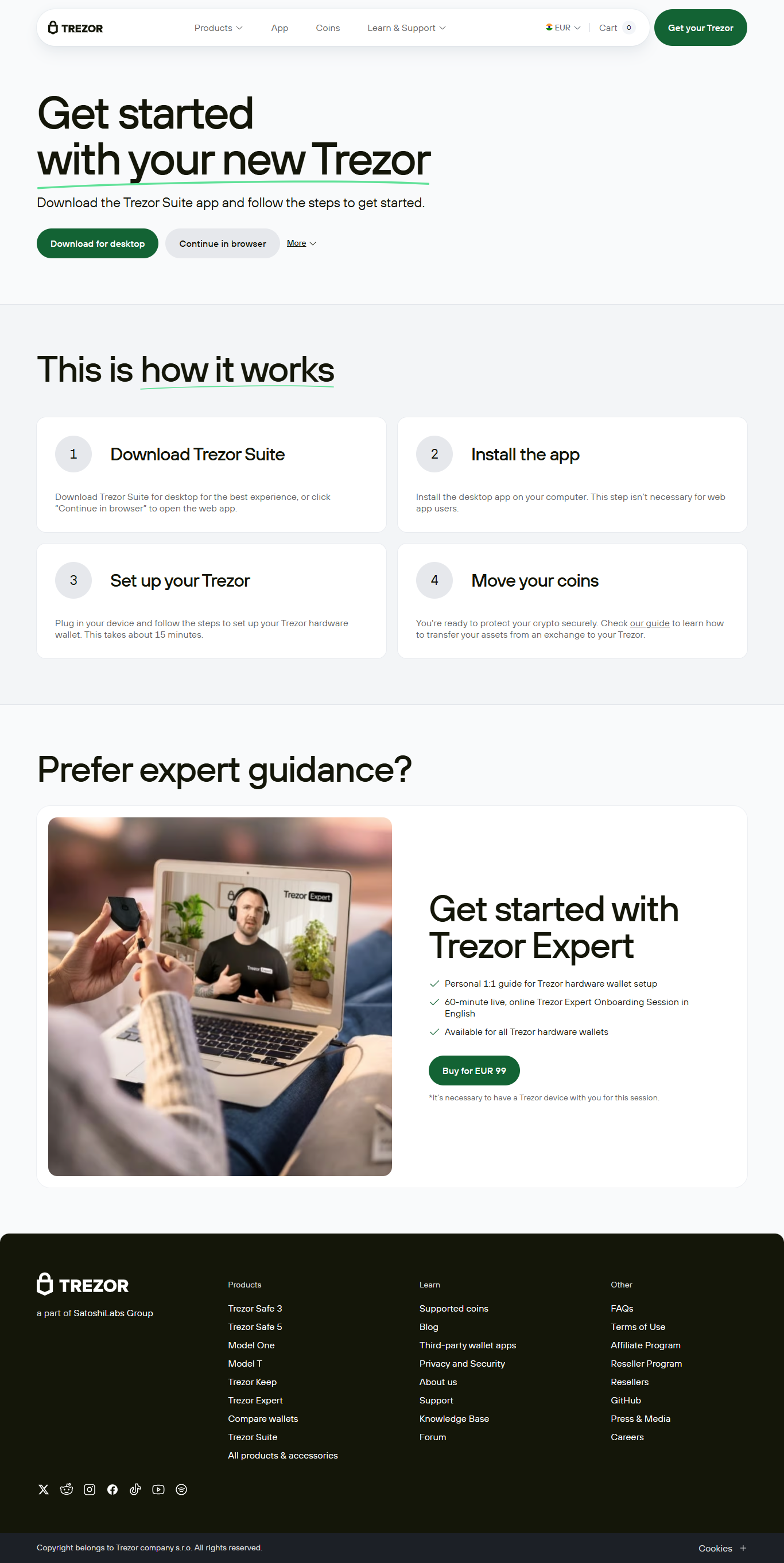
This setup describes the typical flow when you unbox a new Trezor. Steps are intentionally clear so you can follow along safely.
- Unbox and inspect. When you first open your package, inspect the tamper-evident seals and packaging. If the seals appear tampered with, do not use the device; contact the vendor or Trezor support immediately.
- Connect to your computer. Use the supplied cable to connect Trezor to a desktop or laptop. Visit the official Trezor website for the latest Trezor Suite or recommended apps. Always verify the URL yourself — phishing websites exist.
- Install Trezor Suite or use supported interfaces. Trezor Suite is the first-party desktop app for managing the device. It walks you through firmware updates and setup. You may also connect to third-party wallets that support Trezor if you prefer.
- Firmware update. New devices may require a firmware update. The update runs on the device and is cryptographically checked. Do this through official channels only.
- Create a new wallet / recovery seed. The device will generate a recovery seed — typically 12 to 24 words depending on model and preference. Write these words down using the included recovery card. Keep the seed offline and never photograph or store it digitally.
- Set a PIN. Choose a strong, memorable PIN. The PIN prevents direct access to the device if it is lost or stolen. Note: entering the wrong PIN repeatedly can trigger time delays or wipe the device depending on settings — this is intended to deter brute force attacks.
- Verify your seed. Trezor will ask you to confirm some words from the seed to ensure you recorded it correctly. Only after verification is your wallet fully ready to receive funds.
Best security practices for everyday use
Good operational security (OpSec) prevents simple mistakes that can lead to losses. Follow these practical tips:
- Keep your recovery seed offline in a safe place (or split it across multiple secure locations).
- Never share seed words with anyone — no legitimate service will ask for them.
- Use a unique PIN and consider passphrase encryption (advanced users) to create an additional hidden wallet.
- Verify recipient addresses on the Trezor screen before confirming transactions.
- Maintain a firmware update routine and confirm updates are delivered via official Trezor channels.
Using Trezor with software wallets and exchanges
Trezor integrates with desktop apps, browser extensions, and some online services. When you connect Trezor to a software wallet, the software creates unsigned transactions that the device signs. This means you can use friendly UIs for account management while keeping private keys secure on the device.
Common workflows — receiving, sending, and managing multiple coins
Receiving funds is straightforward: get an address from your Trezor-managed account, verify it on the device screen, and share it with the sender. Sending requires creating a transaction in software, then approving it on the Trezor device. Multi-asset support means you can manage Bitcoin, Ethereum, and many tokens from the same device without exposing keys.
Passphrase explained
A passphrase adds a layer on top of your recovery seed. Think of it as an additional word (or sentence) appended to your seed that creates a separate wallet. While powerful, passphrases increase complexity and risk: if forgotten, they cannot be recovered. Use them only if you understand the trade-offs and have secure storage.
Troubleshooting and common questions
Here are concise answers to issues many users encounter:
- What if I lose my device? Your funds are safe if you have your recovery seed. Buy a new Trezor, restore the seed, and regain access. If you used a passphrase and don’t remember it, recovery is impossible.
- What if my device is stolen? The thief still needs your PIN and seed to access funds. With a good PIN and no physical seed access, your funds remain secure.
- Can I use my seed on another wallet? Yes. BIP39/BIP44 compatible wallets can restore the same addresses from your seed. Be careful: importing the seed into unknown or online wallets can expose it to risk.
- How often should I update firmware? Update whenever Trezor publishes a verified firmware release. Updates patch security issues and add features.
Advanced features and integrations
Trezor supports advanced features: coin-specific settings, hidden wallets via passphrases, and integration with multisig setups and third-party custodial services. Developers can build integrations using Trezor's open APIs. For power users, combining hardware wallets with multisig arrangements substantially increases security for large holdings.
Recovery and redundancy strategies
Consider redundancy for your recovery seed: storing copies in multiple secure locations, using steel seed storage for fire and water resistance, or employing secret sharing schemes for institutional-level protection. Each approach balances convenience, cost, and threat resilience differently.
Frequently overlooked tips
- Regularly check that your recovery seed is legible and intact; paper can fade or smudge over time.
- Test a recovery to a spare device (without moving large funds) to ensure your backup works.
- Be mindful of social engineering — scammers impersonate support staff to coax seed words or passwords from users.
When Trezor may not be the right choice
Hardware wallets like Trezor are excellent for long-term storage and security. However, if you need instant, frequent small transfers on mobile-only platforms, a mobile software wallet might be more convenient. Also, enterprise or custodial solutions may be preferred for businesses that require multi-user controls and regulatory features.
Summary — secure your crypto the smart way
Trezor hardware wallets provide a high level of protection for private keys while remaining accessible to everyday users. By following basic setup steps, practicing safe seed management, and verifying transactions on the device screen, you significantly reduce the risk of loss from hacks and theft. The device fits into workflows with desktop and web apps and supports many currencies and advanced options like passphrases and multisig.
If you follow the guidance here — keep the seed offline, set a strong PIN, verify addresses on device — you will have a robust foundation to manage your crypto assets responsibly and confidently.